



NASA's Lucy Spacecraft, Built by Lockheed Martin, Starts Journey to Jupiter's Trojan Asteroids

"Seeing Lucy start her journey reinforces the strength of the 500 team members from NASA,
The spacecraft was designed, built and tested in
Lucy will be the farthest solar-powered mission from the Sun and will visit a record-breaking number of asteroids – all in the name of studying them for clues about our own origins.
Engineering for an Epic Journey
Lucy's 4-billion-mile odyssey through the solar system will last 12 years and fly by eight objects: one Main Belt asteroid and seven Trojan asteroids that lead and trail
Scientists are keen for an up-close look at these ancient rocks, which are believed to be pristinely preserved leftovers from the formation of our outer solar system 4 billion years ago.
With such a long, unforgiving journey through space, Lucy's engineers designed the spacecraft to be ready for anything. Lucy draws on heritage design elements from previous
Key features of the Lucy spacecraft include:
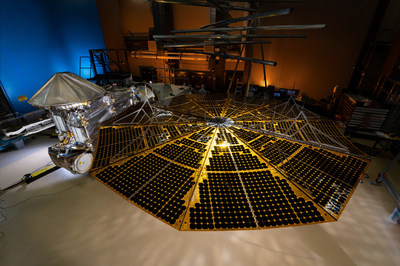
- Some 430 unique components, brought together by more than 2 miles of wire, 170 square feet of composite structure and more than 12,800 electrical connections
- Three powerful, primary instruments to study the geology, composition and structure of the Trojan asteroids
- Two 24-foot diameter solar arrays built by
Northrop Grumman , spanning more than a four-story building when unfurled - A robust thermal design that protects Lucy from extreme space temperatures ranging from -250⁰F to +300⁰F
- Autonomous software that enables Lucy to track asteroid targets as it flies by at an average speed of 15,000 mph
- Advanced production parts like 3D-printed brackets and harness clamps, made from three different materials
The team also made use of the latest collaborative tools and digital engineering techniques on Lucy, including automated testing, digital test review capability and remote collaboration. These tactics helped the team continue production without missing a shift throughout the pandemic.
Seeking Science for the Next Generation
The long duration of Lucy's endeavor means that a student in 4th grade now could find themselves working on this mission when they graduate college.
The spacecraft also draws its name from another scientific discovery that students may recognize from their history books.
Much like the 3.2-million-year-old Lucy skeleton fundamentally changed our understanding of human evolution, this mission aims to change the way we understand how the planets – including Earth – formed.
"The mission teaches us something about the interconnectedness of people over time and space," he remarked. "A poignant moment in the history of humanity that brings the past and the present together – and launches us into the future."
More About the Mission
Learn more about Lucy on LockheedMartin.com. For photos, check out
About
Headquartered in Bethesda,
Please follow @LMNews on Twitter for the latest announcements and news across the corporation.
 View original content to download multimedia:https://www.prnewswire.com/news-releases/nasas-lucy-spacecraft-built-by-
SOURCE
Lauren Duda; +1 303-324-1764; lauren.e.duda@lmco.com